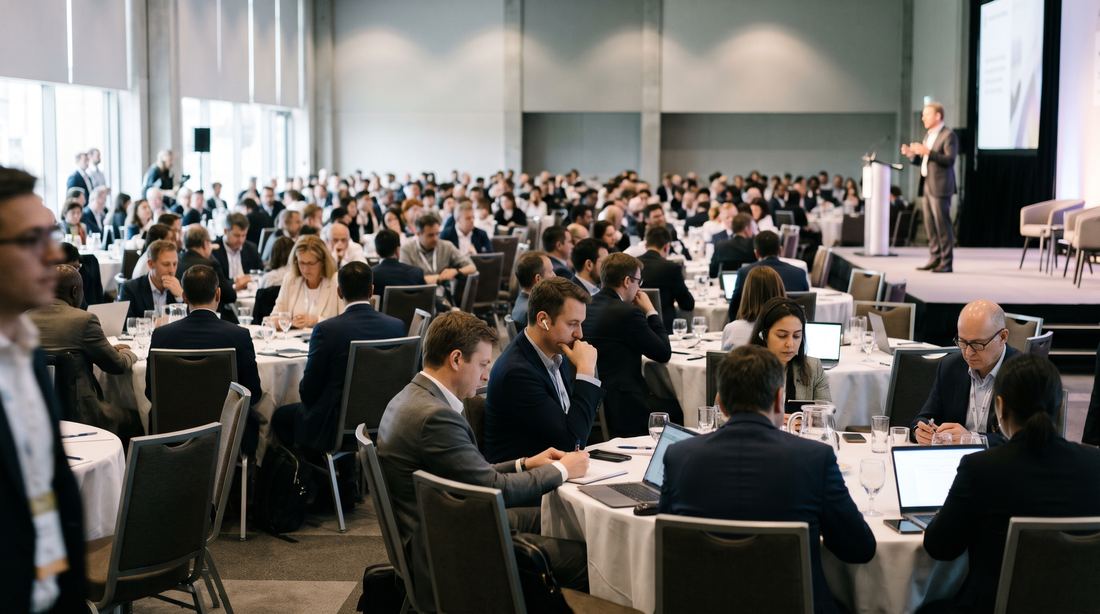
Simultaneous interpretation at a conference means booths, technicians, receivers for every seat and two interpreters per language. For a one-day event in three languages the bill easily reaches several thousand dollars, so most smaller conferences simply run in English and accept that part of the audience follows only half of each talk.
What Roomlingo replaces
| Interpretation | Roomlingo | |
|---|---|---|
| Equipment | Booths, transmitters, a receiver per attendee | A laptop on the sound desk |
| Staff | Two interpreters per language, a technician | Nobody extra |
| Languages | As many as you hire | 50+ |
| Booking | Weeks ahead | Minutes |
Several rooms
Each stage gets its own QR code. Attendees switch rooms on their phone as they move between sessions. The Pro plan covers several rooms running at once.
Names, products and jargon
Before the event, add speakers’ names, product names and technical terms to a glossary so they come through correctly in every language.
When to still hire interpreters
Negotiations, legal proceedings and high-stakes keynotes with heavy wordplay still deserve a professional interpreter. For the remaining 90% of sessions, live AI translation lets everyone follow along.
Questions
How many attendees can connect?
There is no practical limit: translation is produced once per language and shared by all listeners.
Can attendees listen instead of reading?
Yes. Each language also comes as a synthetic voice; voice uses two language-hours per hour.
Does it work for hybrid events?
Remote attendees can open the same link as people in the room.